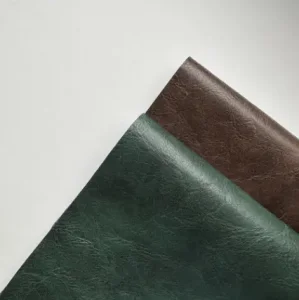
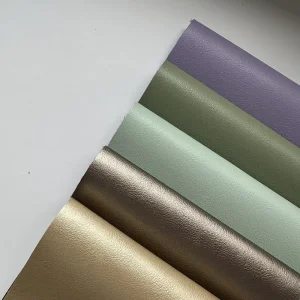
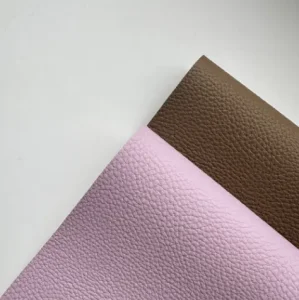
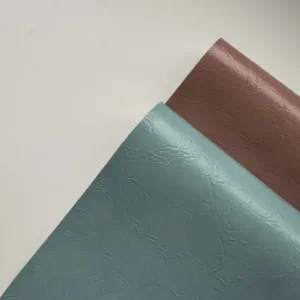
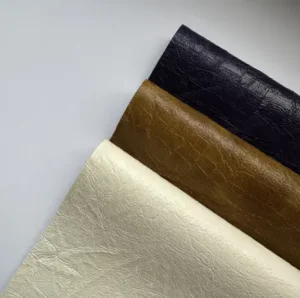
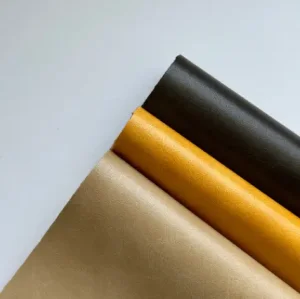
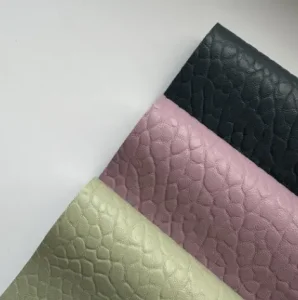
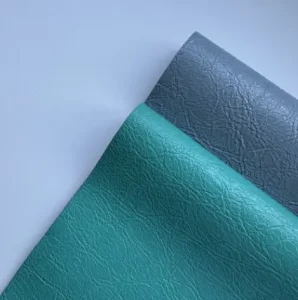
High-Performance Bio-Based & RCS Synthetic Materials
Engineered for luxury footwear, high-end upholstery, and technical leathergoods. Browse our active export inventory compliant with global non-toxic and carbon-reduction charters.
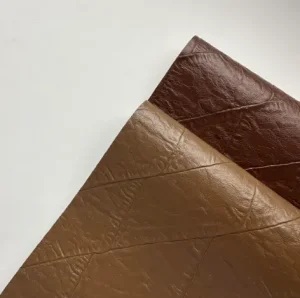
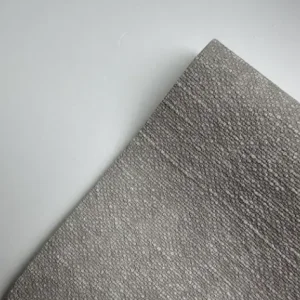
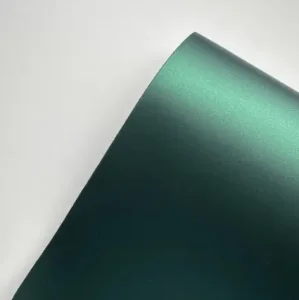
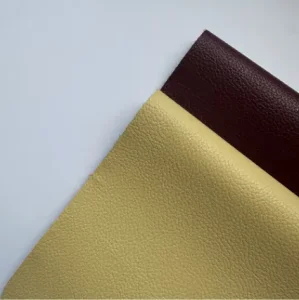
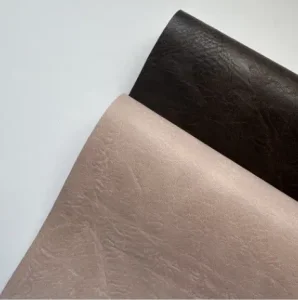
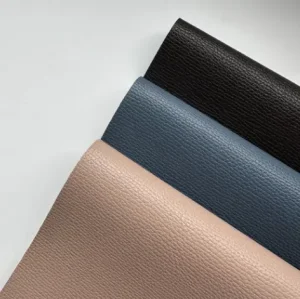
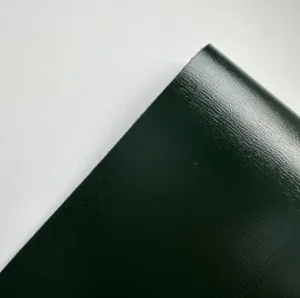
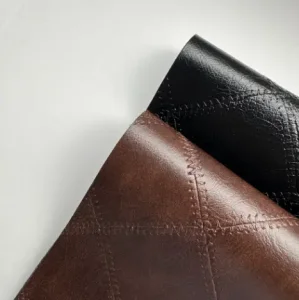
The Global Commercial Reality: Cactus, Bio-Polyols & Scale
Sustainable materials have transitioned from niche concept runways to multi-million-meter industrial tier-1 manufacturing programs. The search for authentic Desserto-style cactus leather and plant-based PU is guided by lifecycle emissions and scalable yield.
Agronomic Feedstock Innovation
Desserto brought worldwide acclaim to Mexican nopal cactus (Opuntia ficus-indica) due to its minimal irrigation requirements and extraordinary biopolymer synthesis. Modern supply systems pair these natural organic plant fibers with refined bio-succinic acid and bio-1,4-butanediol (BDO) matrices.
- Carbon Sequestration via Perennial Crops
- Zero Biodiversity Destruction in Sourcing
Solvent-Free Chemical Polyols
Traditional synthetic leathers relied heavily on dimethylformamide (DMFa), toluene, and toxic plasticizers. OEM manufacturers like JiangXin deploy water-based PUD (polyurethane dispersion) and 100% solids solvent-free extrusion, reducing VOC emissions to near-zero levels.
- Zero DMFa / DMFu Chemical Additives
- ISO 14001 Closed-Loop Gas Recovery
Total Cost of Ownership Parity
The hurdle for plant leathers has historically been cost and scalability. By integrating automated roll lines and certified recycled backing fabrics (RCS/GRS), our facility supplies bio-based materials at a cost structure directly competitive with standard petrochemical PU.
- Predictable Multi-Container Roll Yield
- Less than 2% Roll Edge Imperfections
Localized Regulatory Shields: EU REACH, ASTM D6866 & RCS
Sourcing Desserto vegan leather requires uncompromising chemical safety guarantees. We protect tier-1 brands from greenwashing risks and customs detentions via third-party radiocarbon assays and chain-of-custody documentation.
ASTM D6866 Radiocarbon Testing
Proves the exact proportion of biogenic carbon versus fossil fuel carbon using Carbon-14 isotope measurement. Our formulations deliver certified USDA BioPreferred bio-content ratings ranging from 30% to over 75%, allowing defensible hangtag claims.
- Beta Analytic / USDA BioPreferred Validation
- Eliminates Ambiguity in Bio-Claims
EU REACH & California Prop 65
Full batch traceability guarantees total exclusion of restricted heavy metals (lead, cadmium, mercury), organotins, azodyes, and volatile organic plasticizers. Ready to pass rigorous Brand Restricted Substance Lists (RSL) on day one.
- Strict 6P and Phthalate-Free Verification
- OEKO-TEX Standard 100 Class I & II Conformity
RCS & GRS Chain-of-Custody
Every bio-based surface needs an equally sustainable substrate. We bond plant polyol coatings with Recycled Claim Standard (RCS) certified rPET textiles, microfibers, and cotton bases, backed by official Transaction Certificates (TCs).
- Textile Exchange Certified Custody Tracking
- Full Supplier Transparency Across Roll Lots
Tailored Applications: From Automotive Cabins to Footwear
Different functional endpoints impose contrasting mechanical stress vectors. We calibrate resin chemistry, pore density, and grain replication for each target manufacturing domain.
Automotive & Contract Seating
Demands high Martindale rub resistance (>100,000 cycles), strict low-fogging performance (DIN 75201), extreme UV resistance (ISO 105 B02), and flame-retardant compliance (FMVSS 302). Designed to replace bovine leather in EV interiors.
- Anti-Hydrolysis Resistance (5–10 Year Jungle Test)
- Puncture-Resistant Multi-Layer Engineering
Luxury Goods & Structured Handbags
Requires soft, supple drape, precise edge-paint affinity, and custom emboss depths (Toothpick, Saffiano, or Nappa). Provides high tear strength along stitch lines without edge fraying or tension failure.
- Exceptional Skiving & Beveling Compatibility
- Superior Colorfastness to Wet & Dry Crocking
Performance Athletic Footwear
Demands high Bally flex resistance (>150,000 cold flex cycles at -20°C), low-temperature flex resistance, and breathability for sneaker vamp panels. Seamlessly works with high-frequency welding, hot-melt adhesives, and die-cutting.
- High Elastic Modulus & Creep Resistance
- Water-Repellent Top-Finishing Systems
Technology Roadmap: The Future of Vegan Bio-Leather
Our chemical engineering milestones focus on molecular recyclability, closed-loop biological cycles, and carbon-negative synthesis.
Bio-Polyol Scale
Commercialization of plant-derived polyols replacing 30%–50% of petrochem content with zero compromise on hydrolysis performance. Fully achieved across JX.ECO operational lines.
75%+ Biogenic Fraction
Refining second-generation non-food crop agricultural residues (including cactus and apple pomace) combined with bio-isocyanates to exceed 75% USDA BioPreferred thresholds.
Circular Mono-PU
Engineering matching bio-based polyurethane coatings atop 100% chemically recycled polyester or bio-nylon substrates to facilitate simple end-of-life thermal depolymerization.
CO2-Derived Polyols
Pioneering polyols synthesised via enzymatic carbon capture technology, converting industrial emissions into stable polyurethane matrices with an absolute net-negative carbon footprint.
Frequently Asked Sourcing & Engineering Questions
Technical clarifications on performance metrics, minimum order quantities, custom development cycles, and regulatory auditing.
What is the structural difference between Desserto cactus leather and standard bio-based PU?
Desserto specifically utilizes dried powdered Opuntia cactus pads blended with polyurethane or bio-polyols atop carrier fabrics. Industrial plant-derived synthetic leathers encompass a wider scientific scope: utilizing bio-based polyols derived from starch, corn, castor, or cactus waste. Both offer vegan profiles, but multi-source bio-polyols provide greater tensile consistency, color stability, and hydrolytic resistance for high-wear footwear and seating.
How does plant-derived leather hold up against premature cracking and peeling?
Premature degradation (hydrolysis) in synthetic leather happens when moisture breaks aliphatic or aromatic ester linkages. Our high-performance bio-synthetics utilize polycarbonate-modified or ether-based bio-polyurethane chemistry. In accelerated climatic tests (Jungle Test at 70°C and 95% relative humidity), our formulations consistently exceed 5 to 10 years equivalent usage without cracking.
Can you provide verifiable chain-of-custody documentation for sustainability claims?
Yes. We support supply chain audits by supplying formal ASTM D6866 radiocarbon analytical reports for bio-content, alongside Textile Exchange Transaction Certificates (TCs) for Recycled Claim Standard (RCS) backing textiles. Additionally, materials are screened for zero DMFa, REACH SVHCs, and California Proposition 65 substances.
What are the standard sampling lead times, MOQs, and customization parameters?
For custom grain creation, color matching (Pantone/physical master), thickness calibration (0.5mm to 2.2mm), and backing fabric pairing, lab strike-offs take 5–7 working days. Standard bulk minimum order quantities (MOQs) typically start at 500 to 1,000 running meters per reference/color, manufactured on continuous roll coaters for roll-to-roll uniformity.
RCS Recycled & Renewable Eco Synthetics
Scale your sustainable collections with verified traceable recycled polymers and certified renewable plant-origin faux leathers.