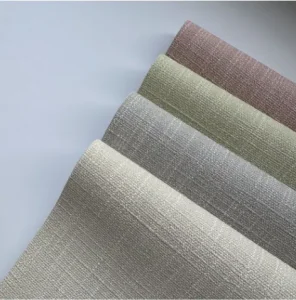
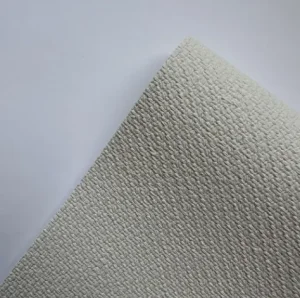
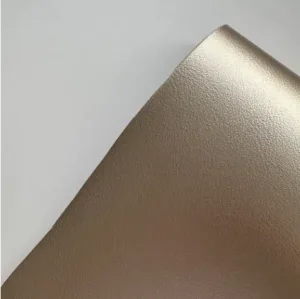
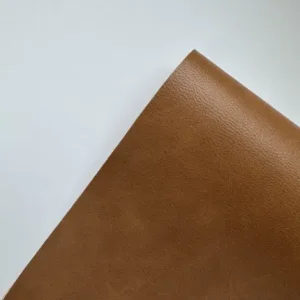
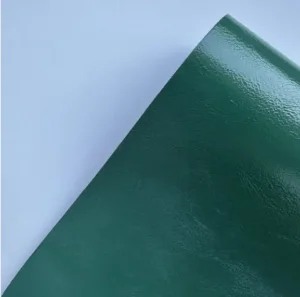
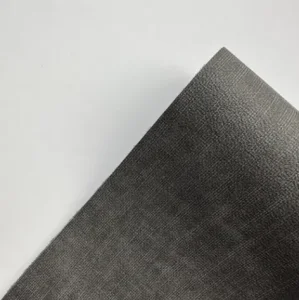
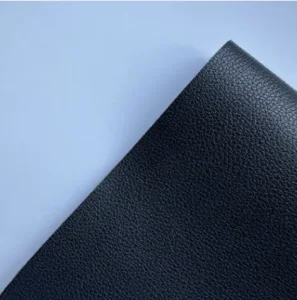
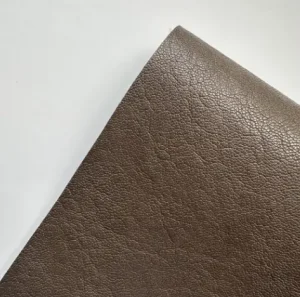
Bio-Sourced & Recycled Grain Formulations
Direct supply line of low-carbon, chemically bonded, and micro-textured vegan polymers tailored for physical durability, structural elastic rebound, and circular traceability.
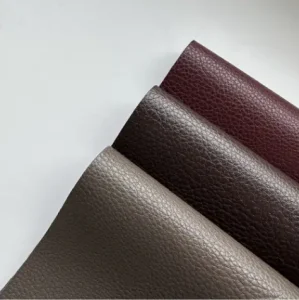
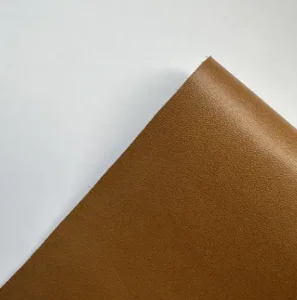
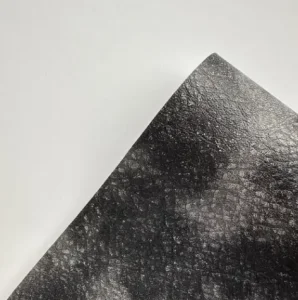
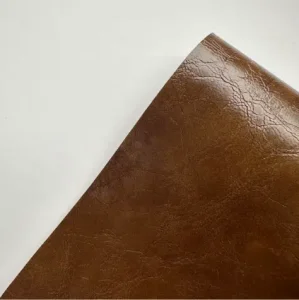
The Global Shift in Artificial Leather Engineering
Accelerating decarbonization mandates, corporate ESG criteria, and the consumer rejection of petroleum-heavy, toxic PVC alternatives are revolutionizing technical composite fabrication.
De-Fossilization of Synthetic Polymers
Traditional PU and PVC face obsolescence due to non-renewable petroleum dependencies and fugitive VOCs. Next-generation artificial leathers synthesize feedstocks from industrial non-food starch, agricultural wastes, and vegetable-derived polyols, drastically slashing upstream Scope 3 emissions without destabilizing structural polyurethane bonding.
Zero-DMFa & Aqueous Chemistry
Global supply chains now ban hazardous solvent processing. State-of-the-art facilities leverage 100% solvent-free hot melt extrusion and pure waterborne polyurethane dispersions (PUD), effectively eradicating dimethylformamide (DMFa), toluene, and heavy plasticizers from production lines and clean room floors.
Chain-of-Custody Circular Integrity
Claims of recycled composition are no longer accepted on trust alone. Integrating post-consumer rPET fabrics and certified industrial recyclates under the Recycled Claim Standard (RCS) and Global Recycled Standard (GRS) provides verified batch integrity, digital material passports, and audit compliance across global border entries.
Enterprise Artificial Leather Solutions
From initial bio-polyol condensation to high-speed dry-transfer embossing, our end-to-end industrial apparatus accommodates rigorous OEM requirements across varied commercial verticals.
Bio-Based Circular Chemistries
Replacing traditional fossil naphtha polyols with carbon derived from certified plant sugars and corn derivatives. Products achieve certified USDA BioPreferred biological carbon concentrations from 20% to over 65% via ASTM D6866 radiocarbon analytical methodology.
Industrial Mechanical Durability
High-density polyurethane networks reinforced with tailored cross-linking agents ensure exceptional tensile parameters, tear strength exceeding 45N, flexing endurance exceeding 150,000 cycles at room temperature, and sub-zero cold crack resilience reaching -25°C.
Bespoke Aesthetic & Tactile Mastery
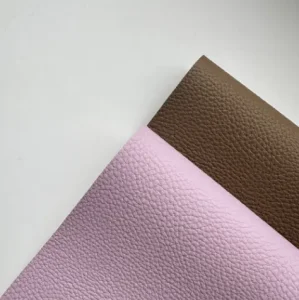
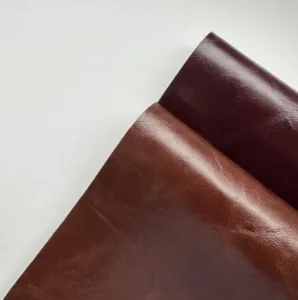
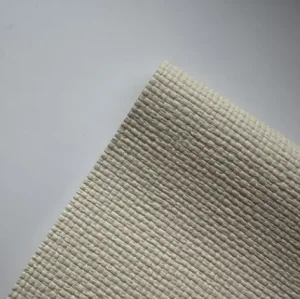
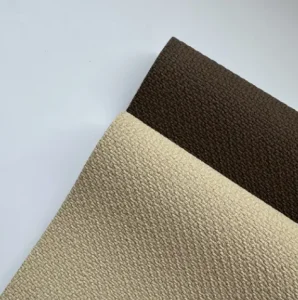
Engineering customized physical attributes from butter-soft nappa tactile profiles, milled tumble grains, and micro-perforations to custom geometric, patent, toothpick, and cross-hatch textures, supported by Pantone spectrophotometer color locking down to ΔE < 0.6.
Global Standards & Localized Compliance Assurance
Safeguarding brand equity with proactive barrier certification that guarantees rapid customs clearance across the European Union, the United States, APAC, and Mercosur trade blocks.
REACH SVHC & RoHS Zero-List
Every synthetic leather roll is formulated to comply fully with European Chemicals Agency (ECHA) SVHC constraints, remaining free from banned aromatic amines, DMFa, organic tin, and hazardous halogenated fire retardants.
Phthalate-Free & 6P Verification
Compliant with CPSIA (Consumer Product Safety Improvement Act) and California Proposition 65 requirements, our synthetic layers completely eliminate restricted plasticizers (DEHP, DBP, BBP, DINP, DIDP, and DnOP) for consumer safety.
RCS & GRS Traceability
Textile Exchange accredited chain-of-custody documentation ensures that post-consumer polyester backings, bio-intermediates, and recovered polyurethane matrices maintain end-to-end Transaction Certificate (TC) authenticity.
Higg FEM & amfori BSCI Auditing
Our Yingde eco-park operates under rigorous third-party ethical and environmental assessments, maintaining closed-loop wastewater recovery, dedicated thermal recuperation, and clean labor standards verified by tier-1 brands.
Localized Engineering Use Cases
Specific structural parameters designed to overcome the precise mechanical, chemical, and climatic stress conditions of distinctive international end markets.
Athletic Footwear & High-Frequency Welds
Formulated with microfiber fleece and high-tenacity woven recycled substrates. Delivers excellent tensile recovery, dynamic toe-flexing resistance (>100k cycles), and high-frequency bonding capability for seamless performance athletic shoes.
Luxury Handbags & Structured Goods
Custom calibrated drape, edge-paint compatibility, and structural temper. Finished with scratch-resistant topcoats, toothpick texturing, or bespoke saddle grains designed to withstand edge abrasion and chemical degradation from sanitizers.
Automotive Seating & Trim Components
Engineered to meet demanding automotive OEM interior specifications: superior UV hydrolysis resistance (Jungle Test 5 to 10 weeks), minimal fogging values (DIN 75201), anti-soiling finishes, and flame retardancy (FMVSS 302).
Contract Commercial Furnishings
Engineered surfaces featuring Martindale abrasion resistance exceeding 100,000 rubs, biocompatible skin contact indices, bleach cleanability for medical environments, and anti-microbial treatments compliant with ISO 22196 criteria.
Engineering Roadmap & Circular Horizon
Strategic R&D investments powering the evolution from transitional bio-hybrids toward 100% closed-loop circularity and enzymatic recyclability.
High-Ratio Bio-Content (60%+)
Expanding corn and sugarcane bio-polyol integration up to 65% total dry polymer mass, backed by comprehensive ASTM D6866 radiocarbon analytical certificates.
Agriloop Residual Substrates
Commercializing structural backings woven from agricultural waste fibers, including pineapple leaf, banana stem, and post-brewing cellulosic pulps.
Monomaterial PUD Systems
Developing unified monomaterial polyurethane formulations where coating and backing melt homogenously at end-of-life, enabling infinite mechanical recycling.
Enzymatic Polymer Biodegradation
Synthesizing molecularly targeted ester bonds sensitive to industrial composting micro-flora, dissolving into harmless biomass without microplastic pollution.
Engineering & Sourcing Intelligence
Key technical criteria, testing parameters, and compliance answers addressed by our advanced materials engineering and international trade desks.
We manufacture three primary material architectures: USDA BioPreferred plant-derived bio-based synthetic leather, Textile Exchange RCS-certified recycled composite leathers incorporating post-consumer rPET substrates, and zero-VOC waterborne/solvent-free eco PU leathers engineered for footwear, leather goods, and interiors.
Renewable carbon ratio is evaluated through quantitative radiocarbon isotopic analysis according to ASTM D6866 protocols. This measures contemporary C14 isotopic ratios derived from renewable biological matter versus fossil petrochemical carbon, ensuring substantiated marketing claims for hangtags and ESG filings.
Yes. Our certified manufacturing facility adheres to strict Textile Exchange chain-of-custody protocols. Upon bulk order dispatch, we issue authentic Transaction Certificates (TCs) validated through accredited third-party auditing bodies (such as IDFL, Control Union, or SGS) to verify recycled material lineage.
Our clean-chemistry platforms satisfy European Union REACH SVHC directives, RoHS, California Proposition 65, 6P/16P phthalate restrictions, and OEKO-TEX Standard 100 Class I/II matrices. Custom Restricted Substance Lists (RSL) provided by brand clients are validated during pre-production sampling.
Our specialized clean-technology production campus spans 135,733 square meters in Yingde, Guangdong. Featuring automated dry/wet PU lines, computerized embossing units, and an integrated 4.68 MW rooftop photovoltaic solar grid, we supply over 16 million meters of custom artificial leather per year to clients across 50+ countries.
We offer bespoke engineering for thickness (0.5mm to 3.0mm), backing substrates (woven, circular knit, microfiber, non-woven rPET), cold-crack threshold (-15°C to -30°C), hydrolytic endurance (up to 10 weeks Jungle Test), flame resistance (BS5852 / FMVSS 302), and tailored antimicrobial or anti-graffiti surface finishes.
Circular Polyurethanes & Low-Impact Composites
High-yield synthetic leather rolls engineered for automated CNC cutting systems, flawless seam stitching, and consistent thickness tolerances across large production runs.