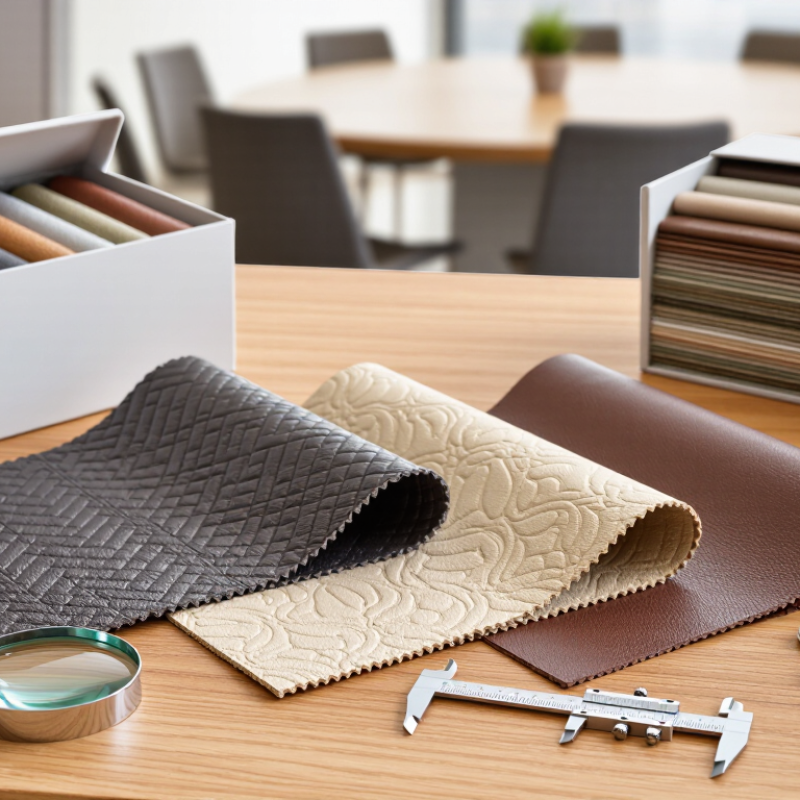
Choosing Patterned Faux Leather for global sourcing involves more than matching a catalog image. Buyers must connect appearance, performance, cost, and regional requirements. A geometric grain may look premium on a screen, yet feel harsh under showroom lighting. A soft embossed surface may impress customers, but crack after repeated folding. These differences matter.
Experienced sourcing teams begin with a clear product brief. It should define substrate, coating type, thickness, width, pattern depth, color tolerance, and intended use. Upholstery, footwear, bags, and automotive interiors require different performance levels. Ask suppliers for physical samples, not only digital images. Review color under daylight and indoor lighting. Check odor, flex resistance, abrasion results, hydrolysis performance, and seam behavior. Small details reveal major risks.
Supplier evaluation also needs evidence. Request recent test reports, factory quality procedures, material traceability, and production photographs. Independent laboratory testing can verify critical claims. Confirm that documentation matches the actual production batch. Regional chemical and product-safety rules may differ, so qualified compliance specialists should review the destination market. Do not rely on a certificate without checking its scope.
The process is rarely perfect. Samples can pass while bulk goods vary. Patterns may shift slightly across production rolls. That is a real concern. A practical sourcing plan includes approved standards, pre-shipment inspections, tolerance limits, and corrective-action procedures. It should also consider packaging, shipping conditions, lead times, and minimum order quantities. Careful comparison helps buyers choose Patterned Faux Leather that performs reliably, supports brand quality, and remains commercially realistic across global markets.
Define the Performance Requirements for Patterned Faux Leather
How to Choose Patterned Faux Leather for Global Sourcing?
Define the Performance Requirements for Patterned Faux Leather
When sourcing patterned faux leather globally, begin with its intended use, not its printed appearance. A handbag panel may need strong abrasion resistance, flexible folding, and stable color. Upholstery may require easier cleaning, higher tear strength, and resistance to sunlight. Write these needs as measurable specifications. Include thickness, backing type, surface finish, grain depth, and acceptable pattern variation. Small details matter. A beautiful material can fail quickly when its performance is poorly defined.
From practical sourcing work, I recommend testing samples before discussing large volumes. Check flex resistance, coating adhesion, colorfastness, hydrolysis resistance, and seam performance. Test under realistic conditions, including repeated bending, moisture, heat, and common cleaning agents. Request reports from qualified independent laboratories when results affect safety or long-term use. Also confirm requirements for each target market. Regulations and customer expectations may differ. Visual approval alone is not enough.
Compare Base Materials, Textures, Patterns, and Surface Finishes
How to Choose Patterned Faux Leather for Global Sourcing?
When sourcing patterned faux leather, start with the base material, not the printed image. PU feels softer and folds naturally, but some qualities require hydrolysis and heat testing. PVC offers stronger shape retention and easier cleaning, though it may feel stiffer in cold rooms. Microfiber-based synthetic leather provides a dense hand and good dimensional stability. Its price and production lead time may be higher. Request the technical sheet, backing composition, thickness tolerance, and test results before comparing quotations.
Texture affects both appearance and performance. Fine grain hides small scratches and supports repeated handling. Deep embossing creates stronger visual depth, yet it may trap dust around furniture seams. Woven, reptile-inspired, or geometric patterns need checking at actual viewing distance. Ask for a full-width panel, not only a small swatch. Pattern scale can shift after cutting, especially on curved panels. Samples reveal flaws. A beautiful sample can lose balance when the repeat meets a side seam.
Surface finishes deserve separate testing. Matte coatings reduce glare and often look more natural, while gloss finishes make colors appear deeper. A soft-touch layer improves hand feel, but it may attract fingerprints or change after abrasion. Compare dry and wet rub results, flex resistance, stain release, and color consistency under warm and cool lighting. Photos can mislead. One sample may pass visual review and fail daily-use testing. That weakness is useful information; revise the finish, pattern density, or base material before placing a large order.
Evaluate Quality, Safety, and Environmental Compliance
When choosing patterned faux leather, inspect more than the printed surface. A sharp pattern can hide uneven coating, weak adhesion, or a strong chemical odor. In supplier audits, I check thickness at several points, then bend samples repeatedly. Watch the corners. Cracking often appears there first.
Ask for batch records and third-party test reports. They should cover restricted substances, color migration, abrasion, hydrolysis, and tensile strength. For markets covered by REACH, request evidence for substances of very high concern and restricted phthalates. Children’s products may require additional limits under applicable safety rules. A certificate alone is not enough. Testing must match the actual material, backing fabric, and production batch.
UNEP reports that textiles create approximately 2–8% of global greenhouse-gas emissions and consume about 215 trillion liters of water annually.
Environmental compliance needs equal attention. Faux leather can reduce animal-derived material use, but PVC coatings and fossil-based polyurethane still create environmental concerns. Textile Exchange reported global fiber production reached 124 million tonnes in 2023 and may reach 160 million tonnes by 2030. That growth makes traceability more important.
Request recycled-content verification, wastewater records, and information on coating chemistry. Check whether “recycled” refers to the coating, the backing, or both. I have sometimes trusted attractive sustainability claims too quickly. That was a mistake. Supplier questionnaires can also miss subcontracted printing or lamination. Independent verification remains necessary.
Assess Suppliers, Sampling Processes, and Production Capabilities
How to Choose Patterned Faux Leather for Global Sourcing?
Supplier evaluation should begin with production evidence, not attractive swatches. The 2024 Textile Exchange Materials Market Report records 124 million tonnes of global fiber production in 2023. Synthetics represented about 69% of that volume, increasing the need for traceable inputs. Ask suppliers to identify the backing fabric, coating chemistry, recycled content, and manufacturing location. Request recent test reports for peel strength, flex resistance, abrasion, colorfastness, and hydrolysis. Reports should come from laboratories operating under ISO/IEC 17025 principles.
Sampling needs more discipline than sending one color card. Request three rolls from different production dates. Compare grain depth, pattern registration, gloss, thickness, and hand feel under daylight. Test stitched panels, folded corners, and printed surfaces after heat exposure. A sample can pass while bulk production fails. This is where many audits fail. I still distrust a perfect showroom swatch.
Production capability must match the order’s real complexity. Confirm coating-line width, pattern repeat accuracy, monthly capacity, minimum order quantity, and changeover time. Ask for a documented inspection plan covering incoming fabric, coating weight, curing temperature, and final roll grading. The 2023 Global Synthetic Leather Market report by Fortune Business Insights projected strong market expansion through 2030, but growth can hide uneven factory control. A supplier should provide batch records, retain samples, and corrective-action reports. Some factories resist this request. That hesitation matters.
Confirm Costs, Lead Times, Packaging, and Global Shipping Terms
Choosing patterned faux leather globally starts with a landed-cost worksheet, not a sample book. Request separate prices for material, printing, cutting, inspection, inland transport, and export documents. Confirm whether the quotation is EXW, FOB, CIF, or DDP. These terms can change your real margin sharply. UNCTAD’s Review of Maritime Transport reports that more than 80% of global merchandise trade by volume moves by sea. Ocean freight therefore needs serious planning.
Ask for lead times by stage: sampling, pattern approval, production, inspection, and dispatch. A printed surface may need extra curing time, especially with complex colors or textured embossing. Request roll width, usable length, minimum order quantity, and tolerance limits in writing. Packaging should protect corners and surfaces from moisture, crushing, and color transfer. Use strong cores, sealed wrapping, and clear roll labels. Small details matter.
Tips: Compare at least three landed-cost scenarios. Calculate one with a 10% delay buffer. Check whether quoted freight includes port fees, surcharges, and customs handling. The World Bank’s Logistics Performance Index 2023 shows major differences in shipment reliability across markets, so a low freight quote may not be the best value. I have seen buyers focus on unit price and overlook damaged rolls. That mistake is expensive. Also, packaging assumptions can fail during humid transit. Recheck them with a real drop test and a moisture-control plan.
How to Choose Patterned Faux Leather for Global Sourcing?
The chart shows an indicative landed-cost build-up for patterned faux leather based on a 500-metre order, 1.4-metre material width, standard export packaging, and ocean freight under FOB sourcing terms. Actual costs vary by construction, pattern complexity, order volume, destination, and season.
Allow approximately 7–10 days for sampling and approval, 20–30 days for bulk production, and 25–40 days for ocean transit after cargo readiness. Confirm whether packaging is charged per roll or per order, and clarify the selected Incoterm, freight responsibility, insurance, customs clearance, and destination delivery obligations before placing the order.
FAQS
How should patterned faux leather quality be inspected?
Inspect the printed surface, coating, backing, and edges. Check thickness at several points. Bend samples repeatedly. Check the corners. Cracks often appear there first. Look for uneven coating, weak adhesion, and strong chemical odors.
Which tests should suppliers provide?
Request batch records and independent test reports. Tests should cover restricted substances, color migration, abrasion, hydrolysis, and tensile strength. Testing must match production. The tested backing fabric must match the delivered material.
Is a certificate enough to confirm safety?
No. A certificate alone is not enough. Confirm the production batch, material structure, and applicable market requirements. Products for children may need stricter safety limits. Ask for evidence, not only scanned certificates.
What environmental information should buyers request?
Request recycled-content verification, wastewater records, and coating chemistry details. Confirm whether recycled content applies to the coating, backing, or both. Faux leather can reduce animal-derived material use, but fossil-based coatings still create concerns.
How can sustainability claims be checked?
Review supplier records and verify subcontracted printing or lamination. Independent verification is useful. I once trusted attractive claims too quickly. That was a mistake. Question vague percentages and unclear material descriptions.
What costs should be included in a purchasing calculation?
Build a landed-cost worksheet before comparing suppliers. Separate material, printing, cutting, inspection, inland transport, and export documents. Compare EXW, FOB, CIF, or DDP quotations carefully. A low unit price may hide port fees or damaged rolls.
How should lead times and shipping risks be managed?
Request timing for sampling, pattern approval, production, inspection, and dispatch. Complex colors or textured embossing may need extra curing time. Add a 10% delay buffer. Ocean shipping needs careful planning. Reliability differs greatly between markets.
What packaging details help prevent damage?
Use strong cores, sealed wrapping, and clear roll labels. Protect corners and surfaces from moisture, crushing, and color transfer. Test packaging with a real drop test. Add a moisture-control plan for humid transit. Small details matter.
Conclusion
Choosing Patterned Faux Leather for global sourcing requires a clear evaluation of both product performance and supply reliability. Begin by defining the material’s intended use, including requirements for durability, flexibility, abrasion resistance, colorfastness, thickness, and ease of maintenance. Compare available base materials, textures, embossing patterns, grain effects, and surface finishes to ensure the appearance matches the product design while maintaining practical performance. Quality checks should also cover dimensional stability, adhesion, odor, restricted substances, and environmental documentation appropriate for the target markets.
Supplier assessment is equally important. Request representative samples, confirm production consistency, review quality-control procedures, and evaluate the supplier’s ability to handle customized patterns, colors, and order volumes. Before placing an order, clarify pricing, minimum quantities, sampling charges, lead times, packaging standards, inspection arrangements, and international shipping terms. A structured comparison of technical specifications, compliance records, communication, and total landed cost will help buyers select a dependable material and reduce sourcing risks.
Charlotte is a seasoned marketing professional with a deep understanding of the company's portfolio and a passion for elevating its presence in the market. With a keen eye for detail and a commitment to excellence, she ensures that our professional blog is regularly updated with insightful articles......