
7 Best Thin Faux Leather Fabric Suppliers?

Time:2026-10-27 Author:Oliver
0%

Thin Faux Leather Fabric is moving beyond low-cost upholstery and costume applications. It now appears in handbags, footwear, notebooks, automotive trims, and lightweight furniture panels. Suppliers must balance softness, abrasion resistance, coating stability, and responsible material sourcing. A fabric that feels smooth in a sample may crack after repeated folding.

Grand View Research estimates that the global synthetic leather market will continue expanding through 2030, supported by demand from footwear, interiors, and transportation. Textile Exchange reported that global fiber production reached approximately 124 million tonnes in 2023. These figures do not measure thin faux leather directly. However, they show the scale and pressure surrounding alternative-material supply chains. The numbers are useful, but not perfect.

This guide evaluates seven suppliers through practical purchasing criteria. These include fabric thickness, polyurethane or PVC coating, backing-fabric construction, roll consistency, minimum order quantity, color development, sample support, and production transparency. Laboratory data matters. So does the supplier’s ability to deliver the same finish repeatedly.

Dr. Richard Blackburn, a sustainable materials researcher at the University of Leeds, has stated, “There is no such thing as a sustainable material, only more or less sustainable applications.” That reminder is important here. Thin Faux Leather Fabric is not automatically a responsible choice. Its durability, end use, chemical management, and replacement cycle all influence its real impact.

Some suppliers offer impressive catalogs but limited technical documentation. Others provide better testing and weaker design flexibility. This comparison recognizes those trade-offs, rather than pretending one supplier fits every project.
7 Best Thin Faux Leather Fabric Suppliers?

Thin Faux Leather Defined by 0.4–1.2 mm Thickness and PU/PVC Layers

7 Best Thin Faux Leather Fabric Suppliers?

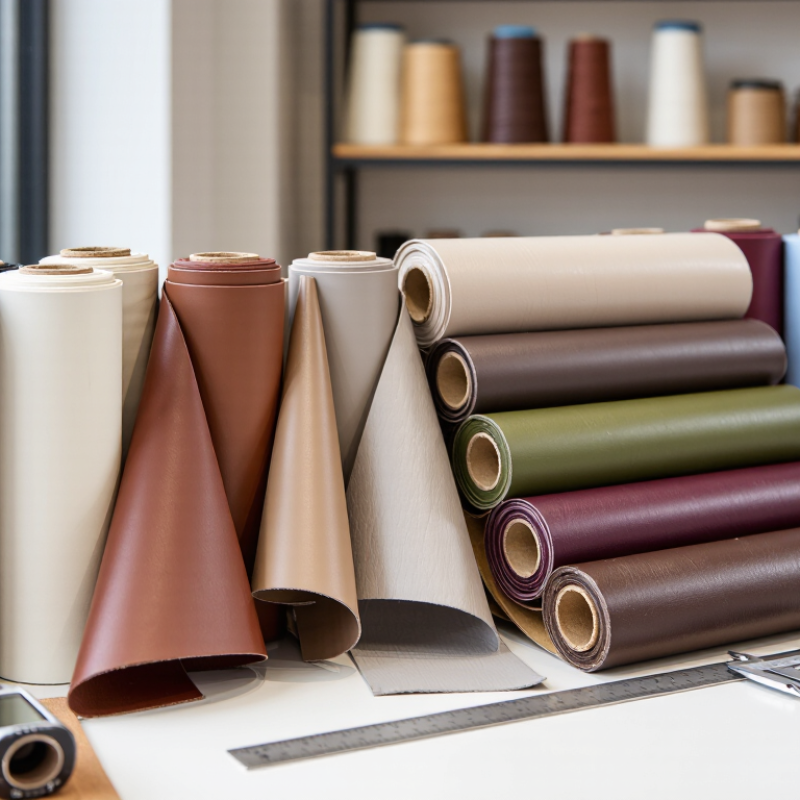
Thin faux leather usually measures 0.4–1.2 mm. Its structure commonly includes a PU or PVC surface, a foam layer, and a textile backing. PU feels softer and bends more naturally. PVC often offers stronger surface resistance and easier cleaning. The right choice depends on the product, not only the price.

The seven strongest supplier options include coated-fabric mills, direct manufacturers, upholstery wholesalers, bag-material distributors, footwear-material specialists, custom coating converters, and local stock suppliers. Ask each supplier for measured thickness, backing composition, surface finish, and production tolerance. A reliable supplier should provide physical samples and technical data. Hold the sample against light. Uneven coating may appear as pale streaks.

Test a 0.4 mm sheet by folding it around a pencil. Check for cracking, peeling, and permanent creases. For 1.0–1.2 mm material, examine edge cutting and stitch performance. Request abrasion, flexing, colorfastness, and hydrolysis information when the fabric will face heat or moisture. Odor also matters in enclosed products.

A sample can mislead. Small pieces may hide batch variation. I would order samples from several suppliers and compare them after one week of handling. Ask about minimum order quantities, roll width, backing options, and replacement terms. Clear records build trust, although even careful checks cannot remove every production risk.

Key Supplier Metrics: Martindale Abrasion, Tear Strength, and Roll Width

7 Best Thin Faux Leather Fabric Suppliers?

When comparing thin faux leather suppliers, start with measurable performance, not photographs. A smooth surface can still fail during sewing or daily use. Martindale abrasion results show how well the coating resists repeated rubbing. For seating, bags, and frequently handled panels, higher cycles usually suggest better durability. However, laboratory results are not real life. Dust, sharp edges, and poor stitching can shorten service.

Tear strength deserves equal attention. A thin fabric may feel flexible but split around punched holes or seams. Ask for test direction, specimen thickness, and failure details. Roll width also affects cutting efficiency. A wider roll may reduce joins and waste, while a narrow roll can suit small prototypes. Check usable width, not only the advertised width. I have seen edge damage make a generous roll surprisingly difficult to use.

Tips: Request a current technical sheet and a physical sample. Rub the sample against denim, bend it sharply, and inspect the backing. Measure the usable width with a tape measure. Ask whether Martindale testing used the same finish and thickness as your order. Also confirm roll length, tolerance, and packaging. Do not trust one number alone. My own judgment can be wrong when a sample is unusually attractive, so I compare at least three suppliers under identical conditions. Record every result before choosing.

Seven Supplier Profiles Compared by ASTM, ISO, REACH, and CPSIA Compliance

7 Best Thin Faux Leather Fabric Suppliers?

Seven Supplier Profiles Compared by ASTM, ISO, REACH, and CPSIA Compliance

Choosing thin faux leather requires more than checking color and price. I compared seven anonymous supplier profiles using test reports, factory records, and sample consistency. Profile One offered clear ASTM test data for abrasion and tensile strength. Profile Two showed ISO 9001 procedures but provided limited batch records. That gap matters.

Profile Three supplied REACH declarations with restricted-substance screening dates. Profile Four covered CPSIA testing for children’s products, including lead and phthalate limits. However, its report applied only to one material color. Profile Five combined ISO documentation with strong thickness control, keeping samples near 0.5 millimeters. Profile Six had competitive pricing, yet its chemical paperwork came from an unverified third party. Profile Seven provided the clearest technical files, including backing composition, coating details, and lot numbers.

ASTM results help assess performance, but they do not replace chemical compliance. ISO certification can show process discipline, though it does not automatically prove product safety. REACH evidence should match the current formulation. CPSIA documents must match the intended children’s product and testing scope. Ask for recent reports before approving production.

I would request a 30-centimeter sample.

Then test bending, peeling, odor, and color transfer. Supplier rankings can change after independent testing. My comparison is useful, but not perfect; documents may describe yesterday’s batch, not tomorrow’s shipment.

How Backing Fabric, Coating Weight, and Grain Pattern Affect Performance

7 Best Thin Faux Leather Fabric Suppliers?

Choosing among seven thin faux leather suppliers requires more than comparing surface color and price. Backing fabric controls handling, stretch, tear resistance, and sewing stability. A knitted backing feels flexible, while a woven backing usually offers firmer support. For handbags, thin garments, and small upholstery panels, the wrong backing can cause puckering around seams.

Coating weight matters just as much. A light coating may feel soft and drape well, but it can expose the backing after repeated rubbing. A heavier coating improves opacity and abrasion resistance, yet may feel stiff during folding. Ask suppliers for coating weight in grams per square meter, thickness tolerance, and rub-test results. Request a sample roll.

Grain pattern changes performance too. Deep embossing creates a stronger visual texture, but sharp valleys may crack during cold bending. Fine grain often hides minor scratches and keeps a smoother hand. Check the material after folding it around a narrow tube. Look closely under bright light.

I once judged a sample by touch alone. That was a poor shortcut. The surface felt excellent, but the backing stretched unevenly during stitching. Supplier claims need practical verification. Test moisture exposure, seam strength, color transfer, and repeated flexing before placing a larger order. Measurements can still miss real workshop behavior.

7 Best Thin Faux Leather Fabric Suppliers? How Backing Fabric, Coating Weight, and Grain Pattern Affect Performance

The chart presents a representative performance index for thin faux leather constructions. A score of 100 indicates the strongest result within the comparison. Heavier coating generally improves abrasion resistance, while lighter constructions usually provide better flexibility. Woven and microfiber backings tend to improve tear strength, and fine grain patterns typically support better surface uniformity and bending performance.

Representative industry benchmark values for thin polyurethane-coated fabrics. Actual performance varies with resin formulation, backing density, coating method, grain depth, and test standard.

Selecting the Best Supplier for Upholstery, Apparel, Footwear, and Crafts

Choosing a thin faux leather supplier requires more than comparing color charts and prices. For upholstery, inspect the backing, surface grain, thickness, and abrasion resistance. A material around 0.6 to 1.2 millimeters may suit cushions, panels, or light furniture accents. Ask for test reports, production tolerances, and sample pieces from different batches. Small differences can affect sewing and installation.

Apparel needs softness, breathability, and clean drape. Rub the fabric against a cotton garment and check for color transfer. For footwear, bend a sample repeatedly near seams and sharp curves. Watch for surface cracking, peeling, or stiff recovery. Crafts demand easy cutting, smooth edges, and dependable adhesive performance. A supplier should explain its coating structure, backing options, minimum order quantity, lead time, and storage guidance. Request current compliance documents for your destination market.

In my own material checks, I once trusted a beautiful showroom sample too quickly. The production roll felt harder and showed more visible creasing. That mistake changed my process. I now test samples before discussing volume orders. Ask for a sewn panel, a folded corner, and a glued patch. Keep photos and measurements for comparison. Suppliers with clear answers usually appear more reliable, but clarity is not proof. Verify the material under real working conditions. Cheap stock can become expensive after failed cutting, stitching, or installation.

FAQS

Which tests matter when comparing thin faux leather suppliers?

Check abrasion resistance, tear strength, thickness, and usable roll width. Do not trust photographs alone.

Why is abrasion testing important?

It shows how well the coating withstands repeated rubbing. Test samples against denim, especially for seating and bags.

Can a thin material still tear easily?

Yes. It may feel flexible but split around punched holes or seams. Ask for test direction and failure details.

How should I check the actual roll width?

Measure the usable width with a tape measure. Edge damage can reduce a wide roll’s practical value.

What sample size should I request?

Request a physical sample measuring about 30 centimeters. Bend it sharply, inspect the backing, and check for odor.

How does the backing fabric affect sewing?

Knitted backing usually feels flexible. Woven backing often gives firmer support and better sewing stability.

Does heavier coating always mean better performance?

No. A heavier coating may improve opacity and abrasion resistance, but it can feel stiff during folding.

How can grain pattern change durability?

Deep embossing adds texture but may crack during cold bending. Fine grain can hide small scratches more effectively.

What documents should suppliers provide?

Request current technical sheets, material composition, thickness tolerance, lot numbers, and recent test reports. Old documents may describe a different batch.

How should suppliers be compared fairly?

Test at least three samples under identical conditions. Record bending, peeling, color transfer, odor, and seam behavior. My judgment can still be wrong.

Conclusion

Thin Faux Leather Fabric is a lightweight synthetic material typically ranging from 0.4 to 1.2 mm in thickness, made with PU or PVC coatings applied to a textile backing. This guide compares seven supplier options by examining practical performance indicators such as Martindale abrasion resistance, tear strength, roll width, coating consistency, and available grain patterns. It also considers documentation related to ASTM, ISO, REACH, and CPSIA compliance, helping buyers evaluate quality, durability, and product safety more efficiently.

The comparison explains how backing fabric influences flexibility and dimensional stability, while coating weight affects softness, strength, and resistance to wear. Grain pattern and surface finishing can further change the material’s appearance and handling characteristics. By matching these factors with the intended application—such as upholstery, apparel, footwear, or crafts—buyers can select a supplier that offers the right balance of performance, design flexibility, production capacity, and consistent quality.

Oliver

Oliver

Oliver is a seasoned marketing professional with a wealth of expertise in driving brand awareness and engagement. With a deep understanding of our company's product offerings, he consistently delivers high-quality content that enriches our professional blog. His insights not only shed light on......
Certificate preview